iNSTANT Employment Credit Reports

Pre-Employment Credit Checks for Employers

Screen candidates for financial responsibility before they handle your money. Results in seconds.


Request a credit check
Smiling man in a blazer with arms crossed, in an office. Credit Checks logo.
Black shield icon with a white checkmark.

Reduce Theft and Fraud Risk Before You Make the Offer

When you hire for a role that touches money, trust is not a soft skill. It is the job requirement. A Hire Performance pre-employment credit check gives your HR team a clear, objective read on a candidate’s financial history so you can hire for financial trust with confidence, not on a hunch.

What an Employment Credit Report Tells You

Candidates under severe financial pressure represent the greatest risk of theft and fraud once they are inside your organization. A credit check for employment will not tell you someone is dishonest, and it should never be read that way.


What it does tell you is whether a candidate has a documented pattern of meeting financial obligations, and whether there are pressures worth a conversation before you hand over access to accounts, budgets, inventory, or client funds.
Run credit checks

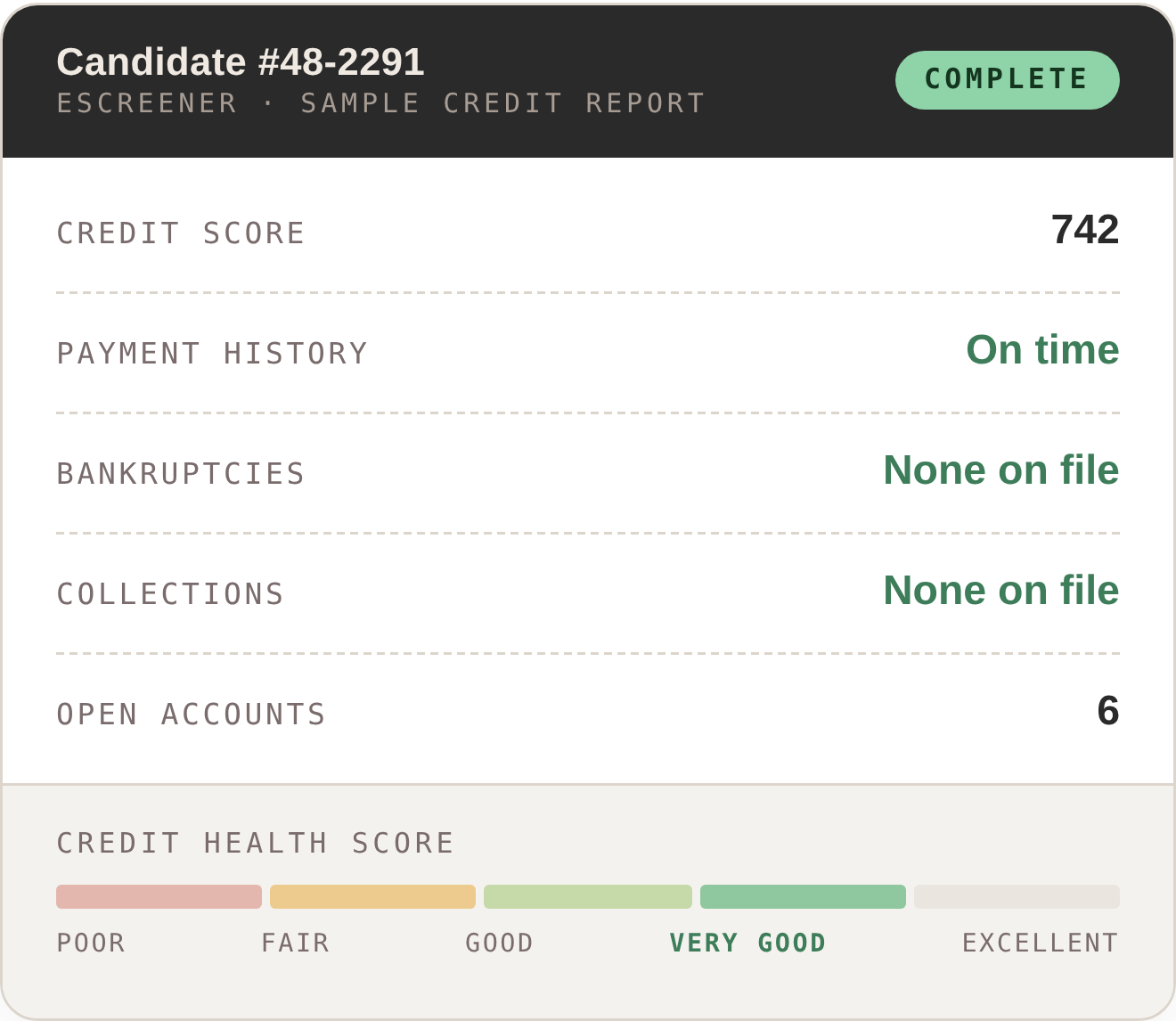
*Sample shown for illustration only. Actual reports may vary in content and format.

Used properly, an employee credit check is one of the least expensive forms of due diligence available to you, and one of the easiest to defend if a hiring decision is ever questioned. – Tim Hardie, President

THE REPORT

What’s Included in a Credit Check?

Every Hire Performance employment credit report returns the same set of fields, so your team compares candidates like for like.

01

Credit score and health score

Rated poor, fair, good, very good, or excellent.

02

Payment history

How consistently the candidate has met their obligations.

03

Bankruptcies, litigation, collections

Public record items on file with the credit bureau.

04

Open and closed accounts

Including loans and mortgages.

05

Trades and local inquiries

Recent activity against the candidate's file.

06

Address history, 7 years

Personal and address information across the past seven years.

07

Employment history, 7 years

Doubles as a cross-check against the resume in front of you.

08

One readable summary

The evidence your team needs to make an informed call.

Want a closer look at what appears on a report? Read What Information Do You Get from a Credit Check?

WHERE IT BELONGS

Screen money-handling roles and positions of financial trust

A pre-employment credit check is not appropriate for every hire, and we will tell you so. It belongs where the role genuinely involves financial exposure.

Talk to an expert

Finance, accounting, payroll and bookkeeping

Purchasing authority and corporate cards

Executive, director and controller hires

Cash-handling and point-of-sale roles

Access to client funds or investments

Government roles with personnel security screening

FOUR EASY STEPS

How employment credit checks work

01


Add the check to your order

Select a credit check on its own or bundled with a criminal record check, employment verification, or reference check.

02


Your candidate consents

They receive a secure link, confirm their identity, and provide written consent. It is captured and stored for you.

03


We pull the report

Hire Performance retrieves the credit file directly from Equifax.

04


Results land in the eScreener

Encrypted, timestamped, and stored alongside every other check you have run on that candidate.

No paperwork to chase, no separate portal to learn, and no need for your HR team to handle bureau data by hand.

CONSENT AND COMPLIANCE

Consent and compliance for credit checks in Canada and the US

Credit checks on candidates are legal in Canada, and they are also regulated. We handle the compliance so your team does not have to.

Written consent is always required

No credit check is run without documented, informed consent from the candidate, captured and retained inside the eScreener.

PIPEDA in Canada, FCRA in the US

Canadian employment credit checks follow PIPEDA and the consumer reporting rules of the province where you hire. US checks follow Fair Credit Reporting Act requirements for disclosure, authorization and adverse action. Some US states and cities restrict employment credit checks entirely, and we will flag where that applies.

Relevance matters

Credit checks should be tied to the requirements of the role. We help you apply them consistently so your process holds up to scrutiny.

The check does not damage a candidate's credit score

An employment credit check is a soft inquiry. It is recorded on the file but does not affect the candidate's rating the way applying for a loan would. This is worth telling candidates, because it removes most of the objection before it is raised.
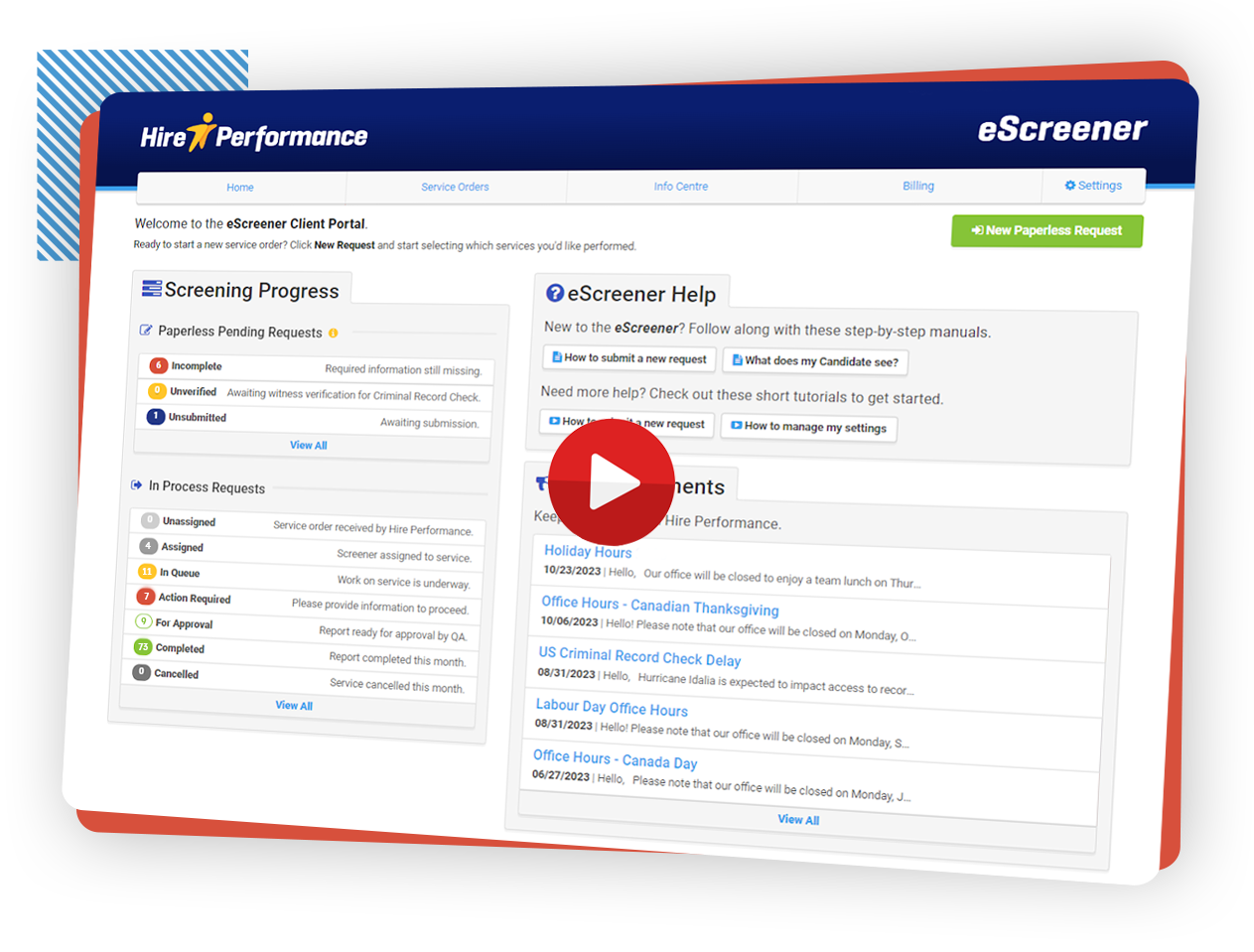
Screenshot of eScreener webpage on a tablet, with a video play button.

Receive results in seconds all within the eScreener

Employment credit checks are completed and returned instantly, and delivered securely online through the eScreener for your review. Because we are integrated directly with Equifax, results come back in seconds rather than sitting in a queue for manual processing.


Hiring moves fast, and good candidates do not wait. Getting the report back before the interview is over means screening stops being the step that holds up your offer.

Request a credit check

Start screening for financial trust

Start screening for financial trust

Employment Credit Check FAQs

  • Do employers use credit scores or credit reports in hiring decisions?

    Both, but the report matters more than the score. The score is a quick summary; the report is where the useful detail lives, including payment history, collections, bankruptcies and open accounts. Most employers use the report to identify patterns worth discussing, not to set a pass or fail cutoff.

  • Why do employers run credit checks in Canada?

    To reduce the risk of theft and fraud in roles with financial exposure, to demonstrate due diligence in hiring, and in some sectors to satisfy regulatory or personnel security requirements. Government of Canada personnel security screening, for example, includes mandatory credit checks for certain positions.

  • Does a background check include a credit check?

    Not automatically. A criminal record check and a credit check are separate services. Many employers bundle them for roles that involve both trust and financial access, which you can do in a single eScreener order.

  • How far back does an employment credit report go?

    Address and employment information covers the past seven years. Bankruptcies, collections and other public record items are retained by the credit bureau for a set period that varies by province.

  • Will a credit check hurt my candidate's credit score?

    No. Employment credit checks are soft inquiries. They appear on the candidate's file but do not affect their credit rating.

  • Can we run credit checks in bulk?

    Yes. The eScreener is built for volume hiring, so you can order and track credit checks across multiple candidates and multiple roles at once, with no minimums.

  • How do we set up credit checks for employee screening?

    Request a demo and we will set up your eScreener account, walk your team through ordering, and have you running credit checks the same day.

  • Do we need the candidate's consent?

    Yes, always. Written consent is mandatory for Canadian checks, and required under FCRA for US checks and the eScreener collects and stores it as part of every order.

  • Can we check credit history across the Canada and US border?

    Yes. Canadian and US employment credit checks are both ordered through the eScreener, so a US employer hiring in Canada, or a Canadian employer hiring in the US, works from one account. Credit files are country-specific, so a candidate's Canadian history and US history are separate records. Tell us where the candidate has lived and worked and we will confirm what is available.


Credit Check Blogs

Person handing a gold credit card to another person near a point-of-sale terminal.
By Tim Hardie July 20, 2023
In the evolving landscape of hiring practices, employers are utilizing a range of tools to assess candidates beyond their resumes. The credit check has become an increasingly prominent tool that businesses are using to make well-informed hiring decisions. In this article, we will discuss what a credit check is, the information available on a credit check report, the benefits of running a check on a candidate, and how an employer can get a credit check. What is a Credit Check? A credit check , also known as a credit report or credit history check, involves obtaining an individual's credit report from a credit bureau or credit report service provider. This report details a person's creditworthiness, financial history, and how they have managed their debts and financial obligations. It is primarily used by lenders to determine the risk associated with lending money, but in recent years, employers have started using it as a tool to evaluate job applicants. What Information is Available on a Credit Check for Employers? A credit report compiles relevant financial data that paints a comprehensive picture of a candidate’s financial responsibility. A credit report includes: Credit Score: The credit score is a numerical representation of an individual's creditworthiness. It's based on factors like payment history, outstanding debts, length of credit history, types of credit used, and new credit inquiries. Credit and Payment History: A credit report includes information about an individual's credit accounts, such as credit cards, mortgages, loans, and debts in default. Outstanding Debts: Outstanding debts, including credit card balances and loans, can provide insight into an applicant's financial stress. Bankruptcies and Collections: Instances of bankruptcy and accounts in collections are also included in the credit report, typically over the past 7 to 10 years. The information available on a credit check report provides employers with an overview of a candidate’s financial history that can be used to determine risk and likelihood for success. Benefits of Running a Credit Check as an Employer A credit check can be a useful tool when assessing a candidate for a position that involves handling or accessing business assets, client assets, and other sensitive financial information such as budgets. Certain industries that often necessitate these checks include law, finance and accounting, government, healthcare, and cybersecurity. The benefits of running a credit check include: Reduced Risk of Fraud and Theft: Certain roles within an organization may require access to company finances, assets, or sensitive information. Conducting a credit check can help identify potential red flags, such as a history of financial troubles or a high debt load, which could suggest a higher risk of fraudulent activities or theft. This can aid in safeguarding the company's assets and data, resulting in better security. Financial Responsibility Assessment: A credit check provides valuable insight into an individual's financial behaviour and habits. By reviewing an applicant's credit history, employers can gauge their ability to manage personal finances, make consistent and timely payments, and handle debt responsibly. This information can be particularly relevant for positions that involve financial responsibilities or access to sensitive company information. Minimize Employee Turnover: For roles that require strong organizational skills, a credit check report can assess key factors for success and highlight candidates who are financially responsible and accountable to their obligations. Information on late payments and outstanding debts may be important considerations for determining whether a candidate is likely to meet their employment obligations and deadlines. Trustworthiness and Reliability: An applicant's credit history can provide insights into their overall reliability and trustworthiness. Responsible financial behaviour is often indicative of a disciplined and dependable individual. This is especially crucial for positions that involve handling confidential information, client interactions, or project deadlines. Mitigating Reputation Risks: Employees, particularly those in customer-facing roles, can significantly impact a company's reputation. Credit checks can help identify potential issues that might not be apparent through standard background checks, ensuring that the individuals representing your organization uphold a company’s desired image and values. Regulatory Compliance: Certain industries, such as finance or healthcare, are subject to strict regulatory requirements. Conducting credit checks can help organizations meet these compliance standards, demonstrating due diligence in their hiring practices and reducing potential legal risks. Personal Financial Stress Impact: An applicant's financial situation can affect their job performance and overall well-being. High levels of financial stress could potentially distract employees from their responsibilities and impact their focus and productivity. Identifying these concerns through credit checks can allow for necessary support or accommodations. Incorporating credit checks into your employee screening process can provide valuable insights into an applicant's financial responsibility, reliability, and suitability for the role. By making informed decisions, businesses can mitigate risks, gain peace of mind with a trustworthy workforce, and enhance their overall success. How to Get a Credit Check Report There are several steps to obtaining a credit check on a potential employee. These include: Obtain Consent: Before conducting a credit check, employers must obtain written consent from the candidate. Inform them of the purpose and scope of the credit check and ensure compliance with legal requirements. Collect Candidate Information: Personal identifying information, including the candidate’s name, mailing address, and date of birth are all required to complete a credit check. Choose a Credit Reporting Agency: Select a reputable credit report provider or credit bureau to obtain the credit report. Keep in mind that credit reporting agencies typically produce faster results from multiple credit bureaus with additional insights compared to a single credit bureau. Submit Information: Provide the candidate's personal details and any required documentation to the chosen credit reporting agency or credit bureau. Review the Report: Once the report is generated, review the information provided. Focus on the credit score, credit history, outstanding debts, and any negative items. Interpret Fairly: When interpreting the credit report, it’s always important to consider the relevant context. Keep in mind that credit histories can be impacted by various factors, including medical emergencies or unforeseen circumstances which can be discussed with candidates to ensure a fair chance is given. Maintain Confidentiality: Treat the obtained credit report as confidential information. Ensure that the credit report is securely stored and shared only with relevant personnel involved in the hiring process. Getting a comprehensive credit check report is a relatively simple process when using a credit service provider compared to a credit bureau. Get a Thorough Credit Check on Your Candidates Today Hire responsible, organized, and trustworthy employees for job positions that involve handling money with Hire Performance’s comprehensive credit report . Our credit check helps you protect your business assets while reducing employee turnover and ensuring due diligence. Contact us today!
Man in white shirt, glasses, working on laptop with stock market data displayed on a monitor.
By Tim Hardie February 15, 2023
Any organization in the financial services industry will likely have access to sensitive financial information and potentially direct access to customers’ funds. As a result, it’s become standard practice for financial institutions to run credit checks on potential new hires to evaluate their financial responsibility and trustworthiness.
Why Do Employers Care About My Credit Score?
By Tim Hardie April 1, 2019
If you have made it past the interview process, it is time for the background check. Depending on the position you are in the running for, your future employer may request a credit check. Why would they care about your credit history? There are numerous reasons why employers may request a copy of your credit bureau files
Person handing a gold credit card to another person near a point-of-sale terminal.
By Tim Hardie July 20, 2023
In the evolving landscape of hiring practices, employers are utilizing a range of tools to assess candidates beyond their resumes. The credit check has become an increasingly prominent tool that businesses are using to make well-informed hiring decisions. In this article, we will discuss what a credit check is, the information available on a credit check report, the benefits of running a check on a candidate, and how an employer can get a credit check. What is a Credit Check? A credit check , also known as a credit report or credit history check, involves obtaining an individual's credit report from a credit bureau or credit report service provider. This report details a person's creditworthiness, financial history, and how they have managed their debts and financial obligations. It is primarily used by lenders to determine the risk associated with lending money, but in recent years, employers have started using it as a tool to evaluate job applicants. What Information is Available on a Credit Check for Employers? A credit report compiles relevant financial data that paints a comprehensive picture of a candidate’s financial responsibility. A credit report includes: Credit Score: The credit score is a numerical representation of an individual's creditworthiness. It's based on factors like payment history, outstanding debts, length of credit history, types of credit used, and new credit inquiries. Credit and Payment History: A credit report includes information about an individual's credit accounts, such as credit cards, mortgages, loans, and debts in default. Outstanding Debts: Outstanding debts, including credit card balances and loans, can provide insight into an applicant's financial stress. Bankruptcies and Collections: Instances of bankruptcy and accounts in collections are also included in the credit report, typically over the past 7 to 10 years. The information available on a credit check report provides employers with an overview of a candidate’s financial history that can be used to determine risk and likelihood for success. Benefits of Running a Credit Check as an Employer A credit check can be a useful tool when assessing a candidate for a position that involves handling or accessing business assets, client assets, and other sensitive financial information such as budgets. Certain industries that often necessitate these checks include law, finance and accounting, government, healthcare, and cybersecurity. The benefits of running a credit check include: Reduced Risk of Fraud and Theft: Certain roles within an organization may require access to company finances, assets, or sensitive information. Conducting a credit check can help identify potential red flags, such as a history of financial troubles or a high debt load, which could suggest a higher risk of fraudulent activities or theft. This can aid in safeguarding the company's assets and data, resulting in better security. Financial Responsibility Assessment: A credit check provides valuable insight into an individual's financial behaviour and habits. By reviewing an applicant's credit history, employers can gauge their ability to manage personal finances, make consistent and timely payments, and handle debt responsibly. This information can be particularly relevant for positions that involve financial responsibilities or access to sensitive company information. Minimize Employee Turnover: For roles that require strong organizational skills, a credit check report can assess key factors for success and highlight candidates who are financially responsible and accountable to their obligations. Information on late payments and outstanding debts may be important considerations for determining whether a candidate is likely to meet their employment obligations and deadlines. Trustworthiness and Reliability: An applicant's credit history can provide insights into their overall reliability and trustworthiness. Responsible financial behaviour is often indicative of a disciplined and dependable individual. This is especially crucial for positions that involve handling confidential information, client interactions, or project deadlines. Mitigating Reputation Risks: Employees, particularly those in customer-facing roles, can significantly impact a company's reputation. Credit checks can help identify potential issues that might not be apparent through standard background checks, ensuring that the individuals representing your organization uphold a company’s desired image and values. Regulatory Compliance: Certain industries, such as finance or healthcare, are subject to strict regulatory requirements. Conducting credit checks can help organizations meet these compliance standards, demonstrating due diligence in their hiring practices and reducing potential legal risks. Personal Financial Stress Impact: An applicant's financial situation can affect their job performance and overall well-being. High levels of financial stress could potentially distract employees from their responsibilities and impact their focus and productivity. Identifying these concerns through credit checks can allow for necessary support or accommodations. Incorporating credit checks into your employee screening process can provide valuable insights into an applicant's financial responsibility, reliability, and suitability for the role. By making informed decisions, businesses can mitigate risks, gain peace of mind with a trustworthy workforce, and enhance their overall success. How to Get a Credit Check Report There are several steps to obtaining a credit check on a potential employee. These include: Obtain Consent: Before conducting a credit check, employers must obtain written consent from the candidate. Inform them of the purpose and scope of the credit check and ensure compliance with legal requirements. Collect Candidate Information: Personal identifying information, including the candidate’s name, mailing address, and date of birth are all required to complete a credit check. Choose a Credit Reporting Agency: Select a reputable credit report provider or credit bureau to obtain the credit report. Keep in mind that credit reporting agencies typically produce faster results from multiple credit bureaus with additional insights compared to a single credit bureau. Submit Information: Provide the candidate's personal details and any required documentation to the chosen credit reporting agency or credit bureau. Review the Report: Once the report is generated, review the information provided. Focus on the credit score, credit history, outstanding debts, and any negative items. Interpret Fairly: When interpreting the credit report, it’s always important to consider the relevant context. Keep in mind that credit histories can be impacted by various factors, including medical emergencies or unforeseen circumstances which can be discussed with candidates to ensure a fair chance is given. Maintain Confidentiality: Treat the obtained credit report as confidential information. Ensure that the credit report is securely stored and shared only with relevant personnel involved in the hiring process. Getting a comprehensive credit check report is a relatively simple process when using a credit service provider compared to a credit bureau. Get a Thorough Credit Check on Your Candidates Today Hire responsible, organized, and trustworthy employees for job positions that involve handling money with Hire Performance’s comprehensive credit report . Our credit check helps you protect your business assets while reducing employee turnover and ensuring due diligence. Contact us today!
Man in white shirt, glasses, working on laptop with stock market data displayed on a monitor.
By Tim Hardie February 15, 2023
Any organization in the financial services industry will likely have access to sensitive financial information and potentially direct access to customers’ funds. As a result, it’s become standard practice for financial institutions to run credit checks on potential new hires to evaluate their financial responsibility and trustworthiness.
Why Do Employers Care About My Credit Score?
By Tim Hardie April 1, 2019
If you have made it past the interview process, it is time for the background check. Depending on the position you are in the running for, your future employer may request a credit check. Why would they care about your credit history? There are numerous reasons why employers may request a copy of your credit bureau files